
Double Membrane Gas Holders for a Large-Scale Biogas Project in Jingjiang, China
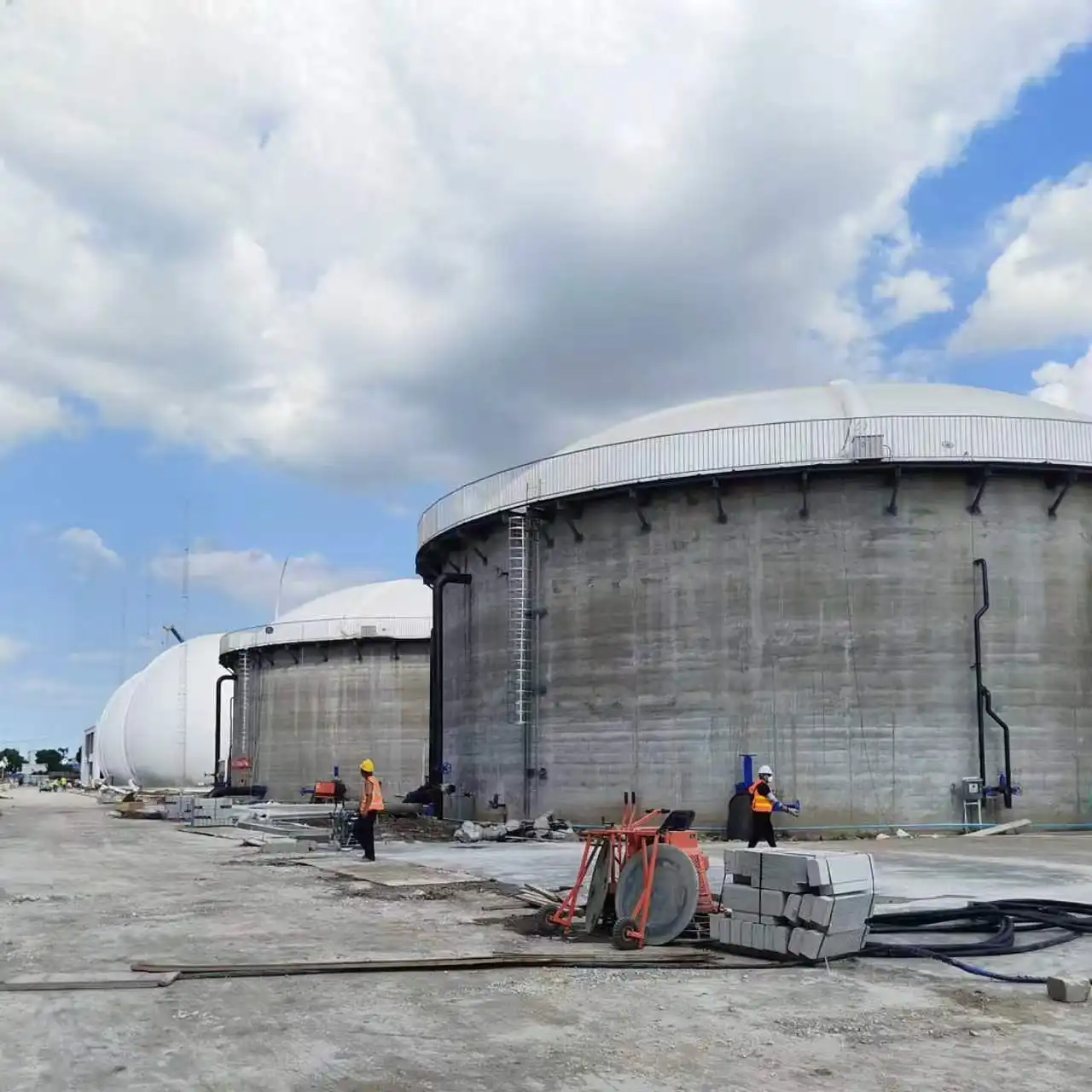
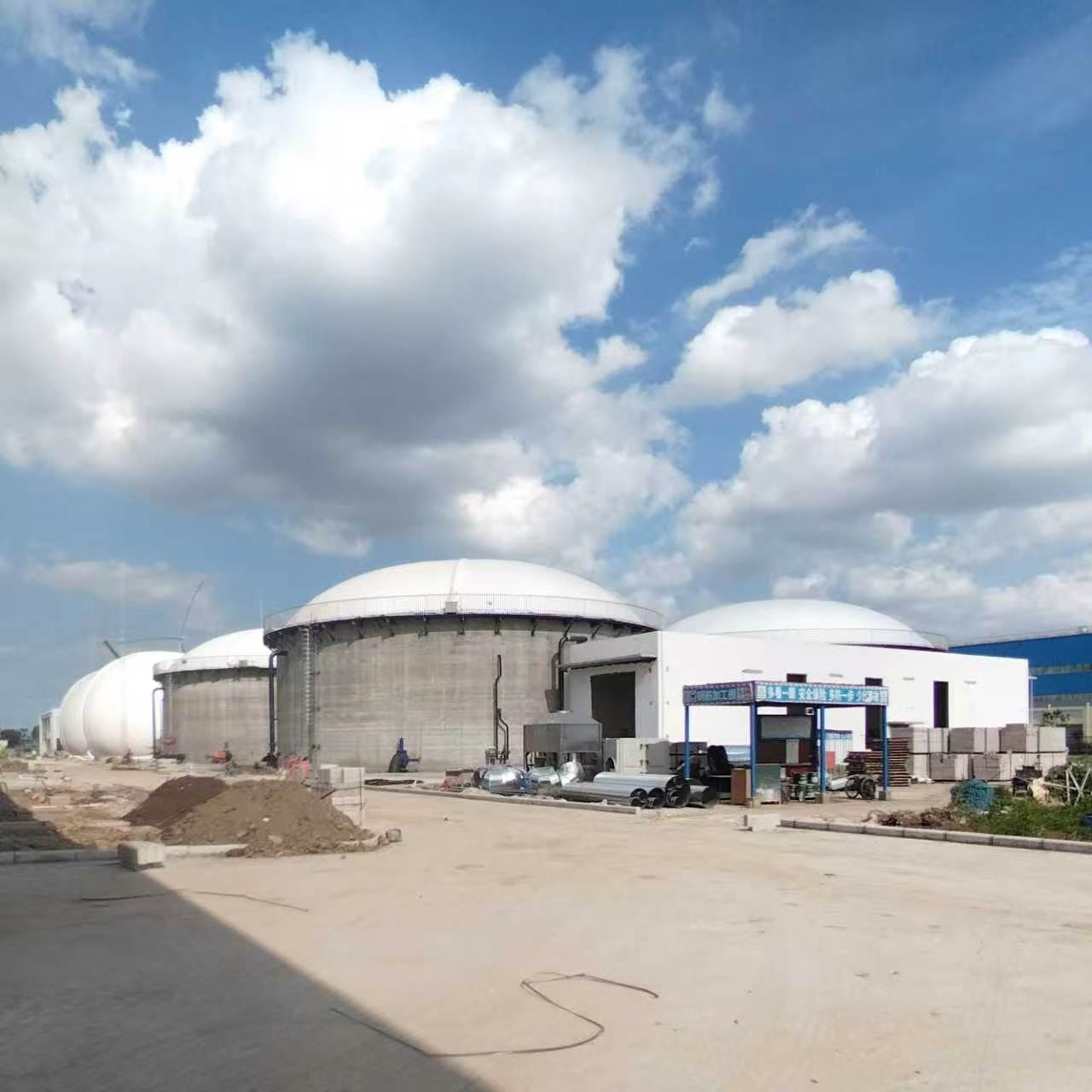
A large-scale biogas project in Jingjiang, Jiangsu Province, has officially commenced operation, with a total gas storage capacity of 17,500 m³. The gas storage system was supplied by Haiyue and comprises two 5,000 m³ independent double-membrane gas holders and five 1,500 m³ integrated double-membrane gas holders. Together, these seven gas holders form a complete biogas storage network.
Two aspects of this project are particularly noteworthy. First, a single 5,000 m³ unit is already considered a large double-membrane gas holder. Installing two such units side by side provides the entire plant with 10,000 m³ of centralized buffer storage capacity. Second, both independent and integrated gas holders are used within the same plant. This combination of centralized and distributed storage is relatively uncommon in domestic biogas projects. It reflects a carefully calculated gas storage strategy rather than a simple equipment procurement list.

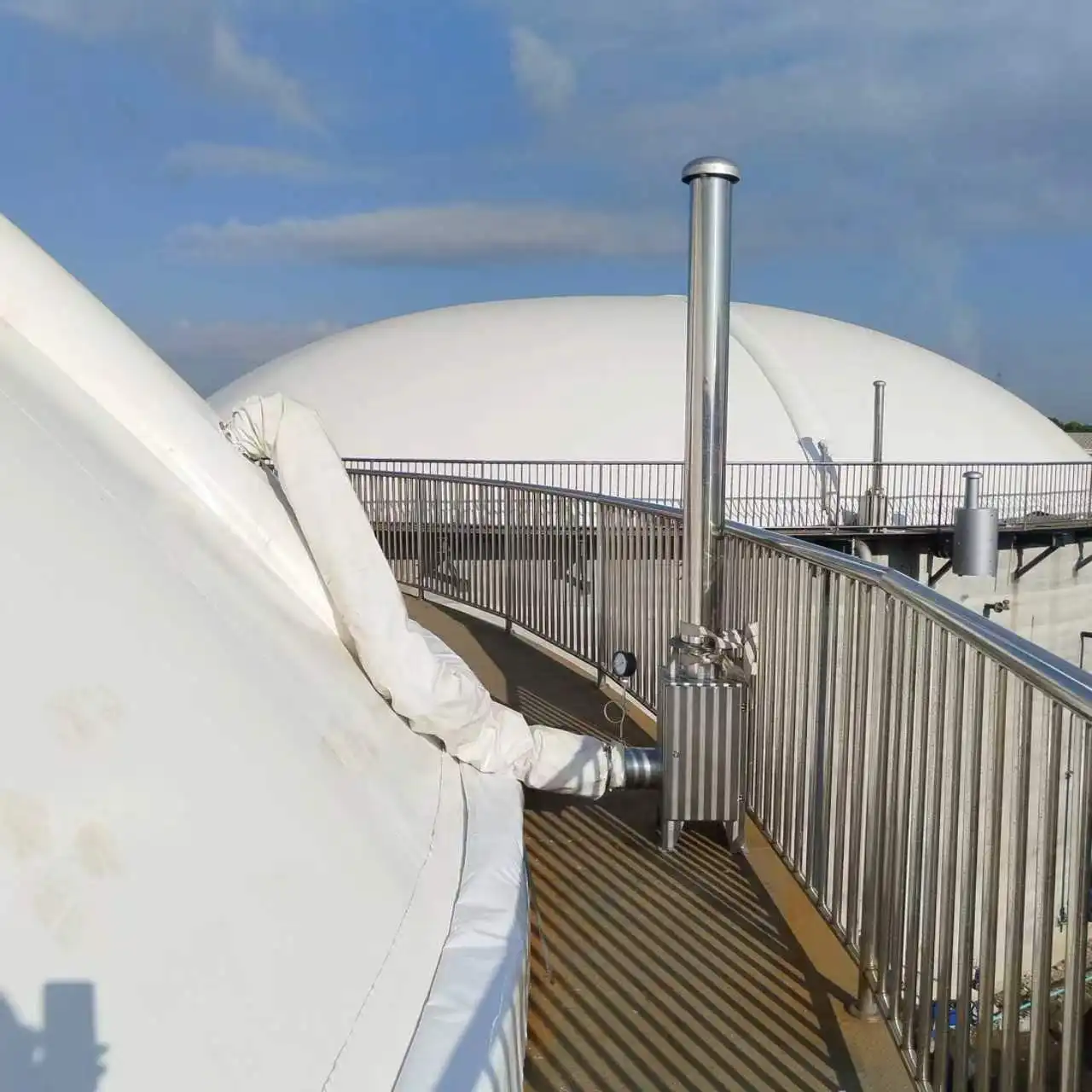
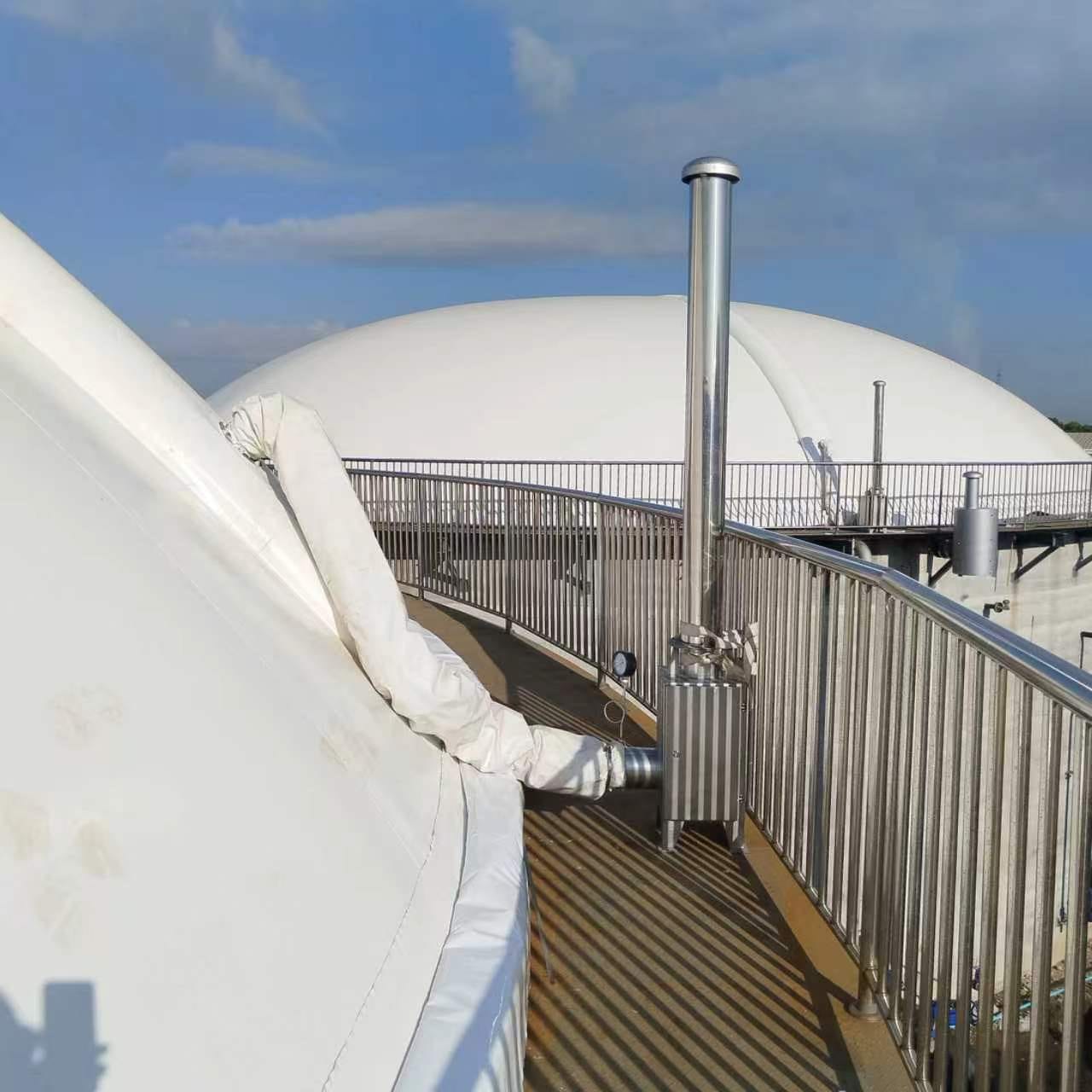
How Does a Double-Membrane Gas Holder Store Biogas?
A double-membrane gas holder consists of three flexible membranes. It requires neither a steel tank shell nor a concrete gas storage tank:
- Outer membrane: The protective layer forms a dome-shaped enclosure over the entire structure. It withstands wind and snow loads while protecting the system from ultraviolet radiation, rain and snow.
- Inner membrane: This is the actual gas-storage membrane. It rises as the stored gas volume increases and falls as the gas volume decreases, providing a high effective storage-volume ratio.
- Bottom membrane: Installed directly on the foundation, the bottom membrane works together with the inner membrane to create an airtight gas storage space, replacing the bottom plate and sealing layer of a conventional storage tank.
The operating principle is straightforward. Support blowers continuously supply air to the space between the outer and inner membranes, creating a constant-pressure air cushion. The inner membrane moves between this air cushion and the stored biogas, keeping the pressure inside the gas holder close to the preset value.
2.Two 5,000 m³ Standalone Double Membrane Gas Holders
The Jingjiang project includes two standalone double membrane gas holders, each with a nominal capacity of 5,000 m³. These units provide a total of 10,000 m³ of dedicated gas storage.
Standalone double membrane gas holders are installed separately from the digestion tanks. Their placement can be coordinated with the gas collection network, available site space, and downstream equipment.
This storage arrangement provides a buffer when gas production exceeds immediate demand. Stored biogas can then be released when consumption increases. The operating role of each gas holder depends on the plant’s piping layout, pressure controls, and gas management strategy.
Why Does Combining Two Types of Gas Holders Deliver Better Results?
Biogas production rarely remains constant. It varies with feedstock quality, temperature, feeding rate and digestion load. Meanwhile, downstream CHP units, boilers and upgrading systems operate according to their own gas-consumption patterns. The storage system serves as the balancing point between biogas production and utilization. Without gas storage, the digestion system and downstream gas-consuming equipment would have to continuously adapt to each other.
The two 5,000 m³ independent double-membrane gas holders provide centralized buffer storage for the entire plant. Each unit has its own independent foundation and can operate without interfering with the other. This allows individual maintenance and future expansion without interrupting the digestion system. During periods of high biogas production, surplus gas is stored; during peak consumption, the stored gas is released. These two large units therefore serve as the plant’s primary peak-shaving facilities.
The five 1,500 m³ integrated double-membrane gas holders are installed close to the biogas production sources. Their integration with the digestion units shortens gas pipelines, reduces pressure losses and minimizes condensate-related problems. Distributing storage capacity among multiple gas production points also means that the entire plant can continue operating even if one gas holder is shut down for maintenance. In addition, the integrated arrangement saves space, making it particularly suitable for plants where available land is limited.
By combining these two configurations, the project achieves both large-capacity centralized peak regulation and distributed gas storage close to the production sources. The result is 17,500 m³ of total buffer capacity, stable pressure and flow for downstream equipment, and a significant reduction in forced biogas flaring or venting.
Conclusion
The Jingjiang biogas project treats 17,500 m³ of storage as capacity the plant can actually use. Two 5,000 m³ independent holders absorb the site’s daily peaks; five 1,500 m³ integrated holders sit next to the digestion units, distributing storage where gas is produced. The result is straightforward: surplus biogas from production peaks gets stored instead of flared, downstream equipment sees stable pressure and flow, and any single holder can be serviced or expanded without stopping the rest of the plant. The system combines bulk buffering with distributed storage to match the rhythms of a large anaerobic digestion facility — built on Haiyue’s CE-certified HYD/HYR double-membrane platform.