
Why Are Biogas Domes Becoming Increasingly Popular?
In recent years, biogas domes have gradually replaced traditional gas storage equipment and become the mainstream choice for biogas and biomass gas storage projects across the globe. Environmental engineering contractors, large-scale livestock farms, municipal sewage treatment plants and new energy project developers all prefer biogas domes as their core gas storage equipment. The rising popularity of biogas domes stems from their all-round prominent merits compared with conventional single-layer gas tanks, steel gas holders and concrete gas storage facilities, covering structural design, service lifespan, operational costs, application flexibility and running safety.
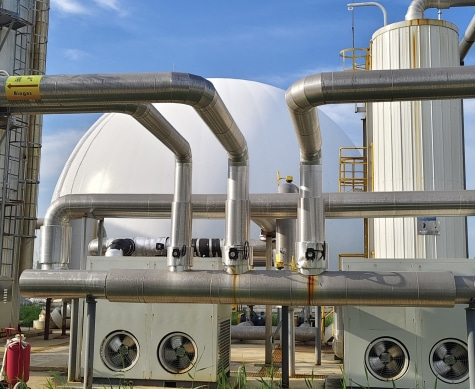
First and foremost, the exclusive double-layer membrane construction endows biogas domes with outstanding performance and flexible operation. Distinct from traditional gas storage gear, each biogas dome consists of an inner membrane and an outer membrane. The inner membrane is dedicated to containing biogas and blocking gas permeation, while the outer membrane provides protection against wind, rain, ultraviolet radiation and external pressure. This specialized structural design efficiently isolates external water vapor and humid air, stopping water condensation and moisture buildup inside the tank, and maintaining a dry, stable internal gas storage environment, which significantly elevates the purity and quality of stored biogas. Meanwhile, most standard biogas domes are fitted with professional gas pretreatment and filtration systems, capable of filtering impurities, dust and moisture from raw biogas, further upgrading gas quality and laying a solid foundation for subsequent biogas power generation, pipeline gas supply and comprehensive resource utilization.
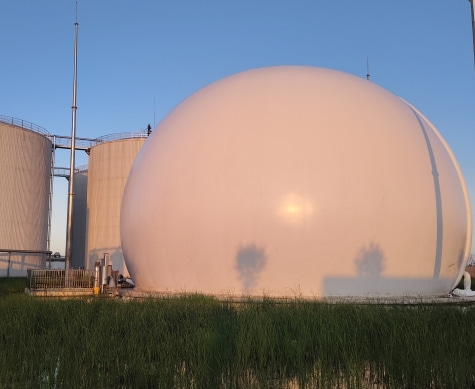
Secondly, biogas domes boast an extended service life and extremely low long-term maintenance costs, delivering greater economic returns for project operation. Manufactured from high-tensile, anti-aging and corrosion-resistant special membrane materials and processed via mature, sophisticated production techniques, standard biogas domes can serve steadily for over 20 years under regular working conditions. In contrast to traditional steel gas tanks prone to rust, corrosion and deformation, biogas domes greatly cut down equipment replacement frequency. Besides, biogas domes feature a simple, rational overall structure with minimal mechanical accessories and an ultra-low failure rate. They run stably on a daily basis, and later inspection, maintenance and partial component replacement can be completed effortlessly, effectively saving substantial labor, material and financial expenditure for long-term project operation.
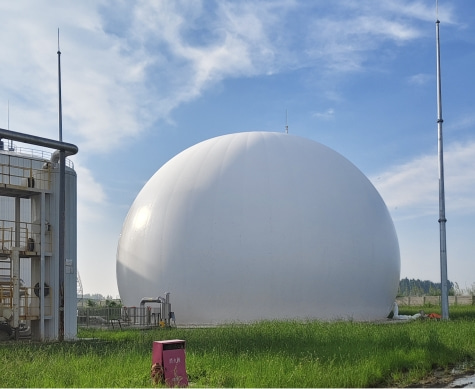
Furthermore, biogas domes fit an extremely wide range of application scenarios and feature powerful customizable adaptability. The volume, structure and installation form of biogas domes can be flexibly customized in accordance with project site conditions, gas output and construction requirements, making them perfectly compatible with all types of biogas and biomass gas projects. Whether it covers municipal sewage treatment, industrial wastewater disposal, landfill leachate treatment, kitchen waste recycling, fermentation of agricultural crop straw, biogas projects powered by livestock and poultry manure, or biomass gas production and storage projects, biogas domes can realize stable and efficient gas storage. With strong versatility, they are able to satisfy gas storage demands from various industries and projects of different scales.
Most crucially, biogas domes offer superior operational safety and eco-friendly performance. They possess excellent overall sealing capacity, which effectively prevents biogas leakage, avoids energy waste, and eliminates environmental pollution and potential safety hazards caused by gas overflow. At the same time, modern biogas domes are equipped with intelligent monitoring and alarm systems that track internal gas pressure, storage volume and overall operating status in real time. Once abnormal pressure, equipment malfunctions or hidden risks are detected, the system will trigger timely alarms to prompt operators to conduct rapid troubleshooting, ensuring long-term safe and stable operation of the entire biogas project.
In summary, thanks to multiple advantages including rational structural design, long service life, low maintenance expenditure, extensive application scope and high safety performance, biogas domes have gained widespread recognition and application within the global environmental protection and new energy sectors. With continuous upgrades to membrane material technology and growing market demand for biomass energy and environmental protection projects, biogas domes will embrace even broader application prospects and evolve into the standard supporting equipment for the construction of modern biogas engineering.